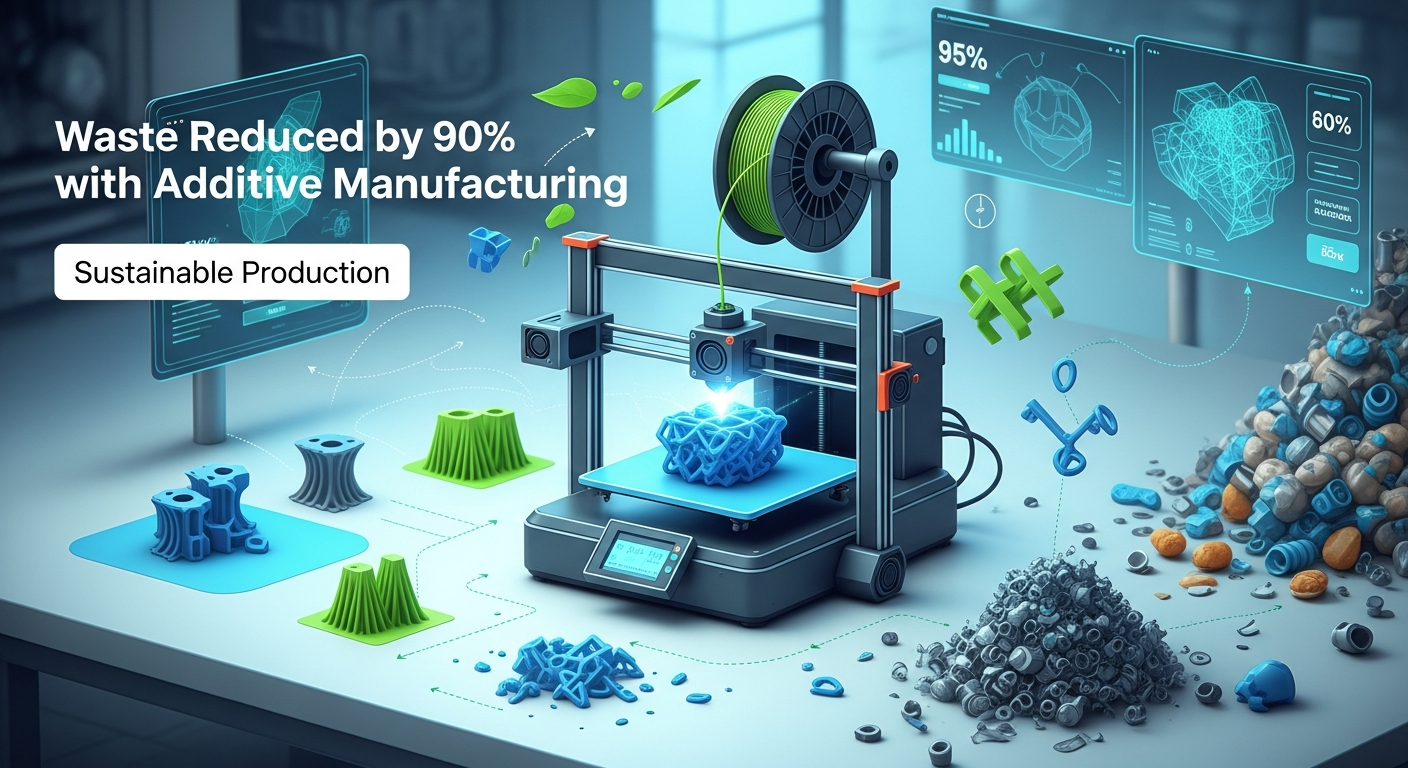
3D printing, also known as additive manufacturing, is a process of creating three-dimensional objects by building up layers of material, such as plastic, metal, or ceramic. As a rapidly evolving technology, 3D printing has the potential to play a significant role in shaping a more sustainable future by enabling the production of customized or bespoke products on demand, reducing waste and excess inventory, and minimizing the environmental impact of manufacturing.
One of the key benefits of 3D printing is its ability to enable the production of customized products, rather than mass producing large quantities of standardized products. This can help to reduce waste and excess inventory, as products are only produced when there is a specific demand for them. In addition, 3D printing can potentially use up to 50% less material than traditional manufacturing processes, which can help to conserve natural resources and reduce greenhouse gas emissions.
Reducing waste and excess inventory in specific industries or applications
3D printing has the potential to reduce waste and excess inventory in a wide range of industries and applications. Some examples of how 3D printing could be used to reduce waste and excess inventory in specific industries or applications include:
These are just a few examples of how 3D printing can be used to reduce waste and excess inventory in specific industries or applications. The potential for 3D printing to reduce waste and excess inventory will depend on the specific needs and challenges of each industry or application, as well as the specific materials and processes used in the 3D printing process.
Reducing waste and excess inventory in the supply chain, from raw materials to end-of-life disposal
3D printing has the potential to reduce waste and excess inventory throughout the supply chain, from raw materials to end-of-life disposal. Some ways in which 3D printing can be used to reduce waste and excess inventory in the supply chain include:
By considering these factors and working to continuously improve the sustainability of the 3D printing process and supply chain, it is possible to reduce waste and excess inventory throughout the supply chain and create a more sustainable future.
Potential challenges and limitations of using 3D printing to reduce waste and excess inventory, and how can these be overcome
While 3D printing has the potential to reduce waste and excess inventory in many industries and applications, there are also potential challenges and limitations to consider. Some of the potential challenges and limitations of using 3D printing to reduce waste and excess inventory include:
To overcome these challenges and limitations, it is important for companies and organizations to carefully consider the specific needs and challenges of their industry or application, and to choose the most appropriate 3D printing technology and materials for their needs. It may also be necessary to invest in additional quality control measures, optimize production processes, or adopt other strategies to ensure the reliability and performance of 3D printed products. By considering these factors and working to continuously improve the sustainability of the 3D printing process, it is possible to overcome these challenges and limitations and use 3D printing to reduce waste and excess inventory.
Adoption of 3D printing be incentivized or supported to maximize its potential for reducing waste and excess inventory
There are several ways in which the adoption of 3D printing can be incentivized or supported to maximize its potential for reducing waste and excess inventory. Some examples of how the adoption of 3D printing can be incentivized or supported include:
By adopting these and other strategies, it is possible to incentivize and support the adoption of 3D printing and maximize its potential for reducing waste and excess inventory in a wide range of industries and applications.
Drive innovation and continuous improvement in waste and excess inventory reduction efforts
3D printing has the potential to drive innovation and continuous improvement in waste and excess inventory reduction efforts in a number of ways. Some examples of how 3D printing can be used to drive innovation and continuous improvement in waste and excess inventory reduction efforts include:
Considering these and other factors, it is possible to use 3D printing to drive innovation and continuous improvement in waste and excess inventory reduction efforts and create a more sustainable future.
Benefits of 3D printing for reducing waste and excess inventory be communicated to stakeholders, including consumers, investors, and policymakers
The benefits of 3D printing for reducing waste and excess inventory can be communicated to stakeholders, including consumers, investors, and policymakers, in a number of ways. Some examples of how the benefits of 3D printing for reducing waste and excess inventory can be communicated to stakeholders include:
Adopting these and other strategies, it is possible to effectively communicate the benefits of 3D printing for reducing waste and excess inventory to stakeholders and encourage more widespread adoption of 3D printing as a means of reducing waste and excess inventory.
However, it is important to note that the sustainability of 3D printing depends on a variety of factors, including the specific materials and processes used, as well as the end-of-life disposal of 3D printed products. Further research and development is needed to fully understand and optimize the sustainability of 3D printing as a manufacturing technology. By carefully considering these factors and working to continuously improve the sustainability of 3D printing processes and materials, we can help to create a more sustainable future through the use of this innovative technology.